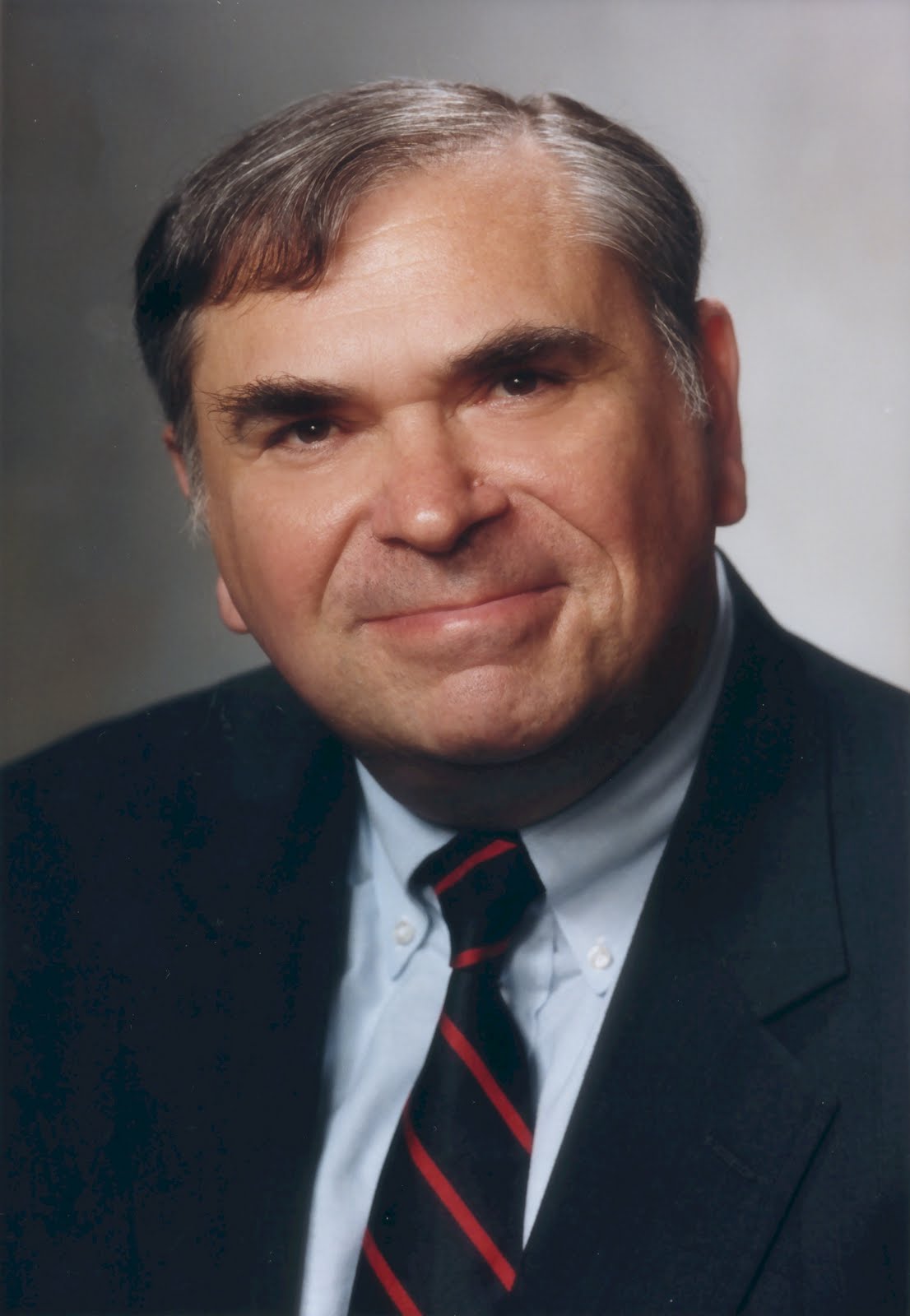
Very few people today may recall Homer L. Ferguson of Waynesville, North Carolina, but Ferguson was once a big wheel on the right end of America's political spectrum.
A few more people are familiar with Howard Phillips, who founded Young Americans for Freedom, a right-wing group that organized and trained college students in the 1960s.
Ferguson and Phillips, though they were not contemporaries, are linked in a way that sheds a bit of light on news of the purge under way at the state Department of Education.
Ferguson, though born in Waynesville, North Carolina, made his name and his fortune in shipbuilding in major American port cities. While in the U.S. Navy, he served as Assistant Naval Constructor during a year at the Columbian Iron Works in Baltimore; three years at the Navy Yard at Portland, Oregon; and a year at the Navy Yard of Bremerton, Washington. He rose to Superintending Naval Constructor during two years at the Bath Iron Works in Bath, Maine, and continued in that capacity for two years at the Newport News Shipbuilding and Dry Dock Company at Newport News, Virginia, and finally made his way to a year-long assignment in Washington, D.C., with the Bureau of Construction and Repair.
All of this training and experience was accomplished by 1905, when Ferguson resigned from the Navy and became Assistant Superintendent of Construction for Newport News Shipbuilding, one of the largest -- if not the largest -- contractors in Newport News, adjacent to the major port at Norfolk, building warships for the federal government. He remained in the Tidewater region of Virginia for the rest of his life.
It was here, in a region and industry flooded with federal defense dollars, that Ferguson matched his training and experience with his developing political philosophy. And it served him well: He became president of Newport News Shipbuilding and Dry Dock Company in 1915, and remained so until his retirement in 1946.
So Ferguson was a major industrialist by the time he became president of the U.S. Chamber of Commerce in 1919, serving a one-year term. He maintained his ties with that organization long past his presidency. In November 1928, the month that Herbert Hoover was elected president, Ferguson published an article in the form of an interview in the Chamber's magazine, "Nation's Business." In it, he lamented "if government was ever staffed with talented people, it might be able to build its own warships, and [Ferguson] would be out of business."
Ferguson wrote,
The best public servant is the worst one. A thoroughly first-rate man in public service in corrosive. He eats holes in our liberties. The better he is and the longer he stays, the greater the danger. If he is an enthusiast -- a bright-eyed madman who is frantic to make this the finest government in the world -- the black plague is a housepet by comparison.
Author Thomas Frank, who uncovered Ferguson's old article, interpreted his words this way:
In short, business needs a lousy government so that no one will consider giving it more and greater responsibility; business itself can manage responsibility, and make a profit from those who have need of it.
Frank also found a reader's response to Ferguson's text, published in a later edition:
If public officials are and remain inefficient, the public will sicken of incompetence and rely exclusively on corporate enterprise. That means less competition and more profits.
The Hoover administration certainly approved of Ferguson's philosophy. But by the time Hoover was replaced by Franklin Roosevelt in January 1933, America was well into its Great Depression, and Roosevelt sought to staff his administration with precisely the sort of "thoroughly first-rate" people Ferguson feared, including one James F. Byrnes of South Carolina.
Ferguson never served in government, but he maintained a presence in business and industry. In 1929, TIME magazine found him railing against organized workers at a symposium at the University of Virginia. The TIME article is edifying
Repugnant — unfair — rotten — archaic — unjust — unacceptable — deplorable —
With such adjectives educated Southerners, gathered last week at the University of Virginia's Institute of Public Affairs, denounced the South's labor conditions. Southern industrialists were excoriated for working women and children long hours, were criticized for opposing unionization, were advised to take warning from upheavals in the textile mills in the Carolinas and Tennessee (TIME, April 15 et seq.). Chief critics were West Virginia's W. Jett Lauck, chairman of the Bureau of Applied Economics, and Virginia's Bruce Crawford, Norton publisher. Declared Publisher Crawford:
"Southern industrial leaders are still clinging to the discarded and discredited wage theories and working conditions of the pre-War period. It is still believed and practiced that low rates of pay are synonymous with low labor costs. . . . The labor union has not been accepted as a permanent and inevitable institution in modern industrial life."
Up in defense of Southern industrialists rose Homer Lenoir Ferguson, president of Newport News (Va.) Shipbuilding Co., onetime (1919-20) president of U. S. Chamber of Commerce, employer of 7,000 non-union men, stockholder in four textile mills. Mr. Ferguson's company is one of the South's great industrial concerns. It reconditioned the Leviathan after the War, built the turbo-electric Panama-Pacific liners Virginia, California, and Pennsylvania, as well as many a vessel for the Navy. Strongwilled, strong-spoken, Mr. Ferguson declared:
"Industrialism in the South . . . is undergoing a series of growing pains.
. . . The condition of the Southern cotton mill worker is very much better than it was a generation ago when he had no work at all. . . . When they talk about $12 a week, they do not tell you about the free homes, the good country food, water and light for nothing and the palaces they live in compared with the mountain homes from which they came. . . . You are dealing with a backward people who had to learn industry from the ground up. . . . Perhaps children do work, but in juvenile vagrancy North Carolina is so far ahead of Ohio there is no comparison. . . . The hours may be long and the pay small but [the textile industry] is a most highly competitive industry. There must be a profit in any industry or it will cease to exist. . . . Unionization is not the universal and complete panacea the American Federation of Labor would have you believe. Anyway, the unions aren't as strong as they used to be. . . . If the Southern textile owners and operators tie up with the labor unions, then they will see the textile industry move elsewhere, as it already moved once. . . ."

Ferguson died in 1952, but his philosophy lived after him and influenced a young man named Howard Phillips. Phillips founded an organization called Young Americans for Freedom to organize and train conservative college students in support of Sen. Barry Goldwater's presidential campaign of 1964. Goldwater lost, but Phillips remained an influential organizer and earned sufficient regard among his party leaders that President Richard Nixon appointed him Acting Director of the Office of Economic Opportunity (OEO) in February 1973.
Again, author Thomas Frank has described the purpose of the OEO. It had been established by President Lyndon Johnson to administer his "War on Poverty" programs. Johnson had intended it to be a muscular, useful agency, focused on serving the needs of America's poor. To demonstrate its importance, he had appointed Sargent Shriver -- brother-in-law of President John Kennedy, and founder of the Peace Corps -- to head the office. Frank writes that the OEO included legal aid for the poor, which led to lawsuits against landlords, banks and employers.
But Nixon appointed Phillips "acting director" of the agency. Once in the position, Phillips put Ferguson's philosophy to work in a hurry. In one month, Frank writes, Phillips "purged the office" and replaced its employees with "friends from the Young Americans for Freedom, paying them a hundred dollars a day."
He withheld budgeted funding from the office's programming, specifically those that benefited minorities and the poor. He issued termination notices to OEO employees around the country and closed legal aid offices in small cities and towns. He drafted a memo -- which was leaked -- in which he explained that if he and his aides acted quickly enough, they could dismantle the agency altogether before its supporters could stop him.
Community Action Associations and the union representing OEO employees had to sue to block Phillips's dismantling of the office. In April -- Phillips's third month on the job -- a federal judge granted an injunction against Phillips's actions, and one month later ruled that Phillips could no longer serve as acting director because he'd never been confirmed by the Senate.
Of course, Phillips was a hero to his followers: He had demonstrated what could be done using Homer Ferguson's philosophy to dismantle and eliminate a government agency from within. Two months after being ousted from his position, Phillips spoke to the Young Americans for Freedom at its national convention in Washington, saying, "I consider myself a very fortunate man. Relatively few Americans have the chance to participate significantly in the shaping of their nation's history."
The assault on OEO was an important landmark in the continuing struggle for individual rights against unaccountable bureaucratic power.
Its creation represented a culmination of forces which began, to a large degree, with the New Deal. Its intended demise was at the heart of Richard Nixon's plan to fulfill the mandate of the 1972 election and carry forward the historic turnabout which could mark him as the century's greatest force on the institutional trends of the American polity.
In November 1996, Phillips said in an interview with National Review, "At OEO, I was confronted with evil, pure and simple. I was not there very long when I discovered that OEO was the war room for those that were trying to overturn what had once been America."
Does this week's news of the purge of 50 staff members at the state Department of Education represent another example of the Ferguson doctrine being applied here in South Carolina? It's hard to tell. Superintendent Mick Zais, through his spokesperson, said the "reduction in force" was accomplished through "voluntary resignations and retirements."

But purging 50 staff members at one swipe -- 13 percent of the department's workforce, excluding the department's transportation workers across the state -- is a red flag to South Carolinians who want a strong, effective system of public schools administered by advocates for public education. Zais is clearly not such an advocate; nothing in his history suggested he would be. And Zais has installed by his side a deputy superintendent with no experience in education whatsoever, one whose resume includes being executive director of his political party.
We certainly know what's next on the agenda: "Zais and Gov. Nikki Haley are considering privatizing school bus operations. That could affect the Education Department's 456 transportation workers."
Is it possible that Haley and Zais will preside over the active, public dismantling of our state Department of Education? Haley already wants the constitutional authority to appoint the education superintendent, and the legislature seems poised to give her that opportunity.
With this governor in control of the state's public schools system, appointing a superintendent to follow in Zais's footsteps, with no functioning Department of Education, and no advocates working within government to rebuild it, do our children have a chance to succeed?