Showing posts with label public schools. Show all posts

Thursday, March 1, 2012

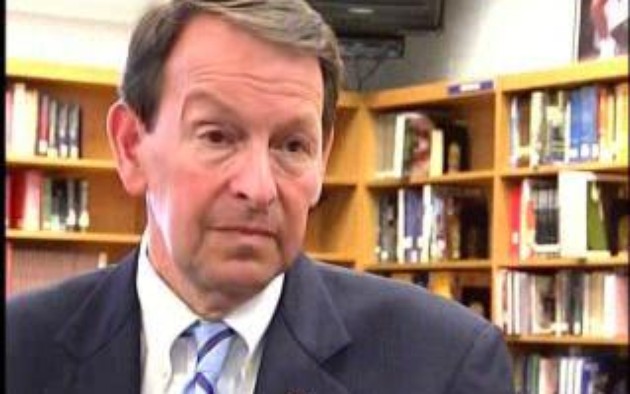
Baker Maultsby returns to covering public education

Baker Maultsby lives a double, maybe even triple, life: by day, a former reporter for the Spartanburg Herald-Journal and communications guy for Wofford College, and small businessman -- and by night, twang-and-rock musician who's performed on "Prairie Home Companion" and had his lyrics quoted in the Wall Street Journal, of all places. And he's a family man, married with children, the whole nine.

With that light schedule, it's understandable that he has a lot of time to fill and wants to fill it with coverage of public education issues. To which I say, welcome, and welcome back.

Maultsby announced yesterday that he's kicking off a website of his own -- SC Schools Report -- "dedicated to promoting solid information and positive perspective about public education in our state. The site is also, in part, an effort to push back against some of the dishonest attacks on teachers and schools in our public schools."

That last part makes it a heavy lift, as the anti-public education crowd in South Carolina has a good 300-year head start. Still, the contributions of a fellow with Maultsby's bona fides, and with a heart in the right place, bodes well for educators and South Carolina's 700,000 public schoolchildren.

So, as of today, you'll find his blog over in the Educating South Carolina blogroll -- branded "Baker Maultsby" so he's high up in the list and easy to find.

In his first couple of posts, Maultsby takes on one of the pressing issues of the day in Columbia, the campaign to push vouchers and tax deductions for private and home school expenses. This is an idea whose time died long ago, but South Carolina isn't known for its ability to let go and move on. Maultsby takes on the matter with intelligence and candor, two vital and rare qualities in State House discourse.

The plan represents a compromise between Rep. Brian White (R-Anderson) and Rep. Eric Bedingfield (R-Greenville).

Bedingfield had proposed a $500 tax credit for parents of students in private school or home school. His plan had the support of South Carolinians for Responsible Government (SCRG), a group that has relentlessly (and, in my opinion, dishonestly) attacked public education in recent years and is widely thought to be backed primarily by wealthy New York libertarian Howard Rich.

But Bedingfield has signed off on a proposal that White had been touting -- to allow only a tax deduction for private school and home school families. The difference is significant: A tax credit is a one-to-one rebate on taxes paid. A tax deduction means that a taxpayer can reduce his or her taxable income by a certain amount -- in this case, $4,000 per child in private school, $2,000 per child in home school.

With a tax deduction, the actual money a taxpayer might receive will depend on a variety of concerns, such as tax brackets, the total amount paid in taxes, and so forth. All this is more complicated than a straight $500 tax credit. But one thing is apparent: Families who are wealthy enough to pay at least $4,000 in state income taxes will be eligible for a private school tax break, while those who are not as wealthy may not receive much help at all.

Meanwhile, families whose children qualify for free or reduced lunch or for Medicaid will be eligible for scholarships, but this is murky, too. How many scholarships will really be available for poor kids? Will those scholarships come anywhere near meeting the cost of tuition at our state's best-regarded private schools? Will scholarship-granting organizations have religious or other requirements that rule out some children?

In all, it appears that wealthy taxpayers will be guaranteed a tax break. Middle-income families may not qualify for scholarships and also may not pay enough in state income taxes for a deduction to help much. And SOME poor families may get help, depending on the pool of scholarship money, eligibility issues, and whether or not the private school of their "choice" will accept their children.

And with that, Maultsby uncovers one of the two ulterior motives at the root of every voucher and tax-credit bill filed since 2003: tax breaks for the wealthy, who already send their heirs to heir-camps (or private or parochial schools, if you prefer, or segregation academies).

Despite debatable data on the issue, private school choice has been a major priority for some Republicans in South Carolina since the early days of former Gov. Mark Sanford's administration. Essentially a libertarian ideologue, Sanford rarely had a positive word about our state's public schools and sought early on to divert public money to private schools. For most of the last decade, out-of-state money has flowed into our state in support of front groups like SCRG and candidates supporting private school choice.

Maultsby won't win any friends at SCRG for reminding readers of their corporate and ideological sponsors, but the truth is refreshing.

I was impressed by the fact that White acknowledges that private school choice will cost the state money. In years past, proponents of sending public money to private schools have claimed that their plans will save public schools vast sums of money. They argue that public schools can cut costs for each student who leaves. This ignores basic concepts of overhead costs. For example, if a public elementary school with 500 students loses 20 students to a nearby private school, the enrollment decline likely won't be sufficient to lay off a teacher or cancel a bus route or cut a guidance counseling position.

To his credit, White rejects the fiction that private school choice won't come with a price tag for taxpayers. Indeed, one of his talking points is that his tax deduction plan won't cost the state as much as a plan promising tax credits -- in fact, he estimates around $15 million vs. somewhere near $50 million (there are about 70,000 kids CURRENTLY in private schools in SC -- $500 per child in that group alone....you can do the arithmetic).

I was disappointed, however, when White used a piece of SCRG-style rhetoric: "When it comes to education, one size does fit all," he said.

The "one-size-fits-all" charge levelled against public education by private school choice supporters and (over and over) by South Carolina Superintendent of Education Mick Zais is hogwash. Public school districts offer all sorts of academic options, special education support, and extra-curricular activities for students. Yes, better funded districts can offer more than poorer districts (hmmmm.....food for thought....), and it is true that state law mandates that students take rigidly standardized tests. But the notion that our public school districts aren't doing their darndest to provide appropriate opportunities for kids of diverse backgrounds, interests, and abilities is simply false.

This is going to be good, and I appreciate having another voice on this side of the public education debate.

Head on over and read the rest for yourself, and encourage others to check out Maultsby's site, too. He's a small businessman, so I'm sure he'll appreciate the traffic. Leave him a note of thanks, and tell him Educating South Carolina sent you.

Thursday, January 19, 2012

Garrick bypasses Zais: A law whose time has come

This is precisely why we have legislators and a legislature in the first place -- to check executive power. Kudos to Rep. Mia Butley Garrick for her advocacy for public education.

From the current edition of Columbia's Free Times:

Superintendent Mick Zais’ controversial stance against accepting federal education grants will soon spark a battle in the legislative chambers.

Rep. Mia Butler Garrick, a Richland County Democrat, recently introduced legislation that would prohibit the state’s top education official from turning down any federal education grant that does not require matching funds.

“I just don’t understand why our superintendent of education would not want to accept all new available federal dollars for education,” she said.

It may have something to do with his ideological opposition to strengthening public education for the 700,000 children enrolled in South Carolina's traditional public schools. But I could be wrong; he may want to love public schools and simply not know how to love them.

Zais hasn’t shut the door on all federal grants, but he recently refused to apply for two federal programs that could have injected millions into the state’s education resources.

One of the programs, the Ed Jobs grant, would have given South Carolina access to $144 million. Another, the Race to the Top program, would have allowed the state to compete for a portion of $200 million in federal funds.

Zais contends such programs equate to federal mandates because of all of the requirements imposed on the state.

Federal highway dollars have the exact same "requirements": accept the federal highway money, and you have to spend the money on building and maintaining highways. Similarly, federal education dollars must be spent on providing educational services to children through public schools. What's the confusion?

But Garrick dismisses the “too many strings attached” rhetoric as a partisan argument often heard in national political circles.

She says South Carolina is not in a position to refuse such grants, and failure to use them amounts to “sabotage” of the education system.

We have a winner. Johnny Olsen, tell the lady what she's won.

Zais spokesman Jay Ragley said the superintendent’s position on such programs was well known when he was elected to office.

Well, to be fair, the good General was running for an office called "Superintendent of Education," and people -- dumb as we are -- tend to infer that if you run for "Superintendent of Education," you might support public schools. Crazy us for thinking that, sure.

So, to help those slower-thinking ones among us, the good General might have offered plainer statements such as, "I oppose the rights of your children to be educated in schools supported by our collective financial resources through tax revenue, and therefore I will do everything within my power to end this scheme of public education as rapidly as my little hands can work, once I take the reins of power in that tall building. Little poor children will have no more access to teachers and books, you can count on that. And if the federal government thinks it can stop me from bringing alllll of our educational progress in South Carolina to a screeching halt, it's got another think a-comin'!"

See, statements like that might've more accurately communicated to the 'lectorate what the General was thinking.

“Respectfully, General Zais opposes this legislation because it silences the voice of the voters,” Ragley said in an email response to the Free Times.

Here, we have a classic example of something called "spin." Political operatives with no background in public education are expert at "spin," and the General has hired a passel of them to speak for him. Here's some more of it:

“In 2010, the voters spoke loud and clear, electing Gen. Zais by a margin of victory in excess of 108,000 votes,” Ragley said. “Gen. Zais has repeatedly called for more, not less, local control of schools so they have the freedom to personalize and customize education for every student.”

It's called "spin" because, in this instance, the virtue of "local control" has been invoked as a fragile and beautiful flower, threatened by boogeyman of federal education dollars. See, by drawing your attention to the pretty flower, this operative has "spun" your attention away from the asininity of depriving our state's public schoolchildren of millions, and millions, and millions of federal education dollars.

Operatives are excellent at spin; they are also excellent at asininity. It's a fact in the Library of Congress.

Garrick said her bill may face something of an uphill battle in the Republican-dominated General Assembly.

Every good thing that has been decent and righteous and worth having or doing has faced an uphill battle in our fair state.

But she says she has bipartisan support.

“I know there are some Republicans who will support this bill,” she said. She expects deliberations on the bill will begin in the House Ways and Means Committee.

The displeasure over Zais’ back-turning on federal grants is widespread. About 50 education advocates and protesters gathered at the State House in December to protest his actions. The rally was organized by the state Legislative Black Caucus, whose members are all Democrats, and the state chapter of the National Association for the Advancement of Colored People.

The South Carolina Association of School Administrators and the South Carolina School Boards Association have also denounced Zais’ position.

“We would hope that our state superintendent of education would welcome the opportunity to seek resources to help our state’s growing population of at-risk children,” said the two groups.

The S.C. Board of Education has been at odds with Zais over various issues, and at one point sought to require him to report on any federal or private grant exceeding $10 million for which South Carolina schools are eligible, and to justify his decision on whether to apply.

Zais argued the board has no authority over him and that he reports to voters, not the board.

Translation: This ball is my ball. If you do not have a ball, too bad for you. This ball is mine, and I say who gets to play with it, and I say what we will play. You may not play with my ball if I say you may not, so if you want to play with my ball, you must agree with me on all things. Plus, I don't have to talk to you if I don't want to. I control my ball. You do not. You are not my boss, so you cannot tell me what me what to do with my ball. It's mine. Mine, all mine.

The disagreements were later patched up after the board’s new chairman, Dennis Thompson, met with Zais and agreed to put the issue behind them and move ahead in a spirit of cooperation.

Translation: Our state's board of education agreed that it would not ever again suggest to Mick Zais what he should do with his ball, because the ball is his ball. Agreement that the superintendent has a ball and controls it, and the state board of education has no ball and controls nothing, represents cooperation.

Zais also came under fire from Democrats for failing to request more money for education in the coming year. Zais asked the Ways and Means panel not to make any cuts in the budget that provides the basic funding for classrooms, but he did not ask for an increase.

His first term as superintendent will continue to stir emotions as critics see his refusal to accept federal funds for education as a flagrant disregard for the needs of public education.

That's no joke. If we're not already searching out good candidates to replace Zais and his operatives, we have only ourselves to blame.

Wednesday, August 17, 2011

Record scholarships defy state's NCLB ratings

I noticed an odd juxtaposition of facts earlier this month when news came that all but one of South Carolina's school districts failed to meet federal adequate yearly progress goals.

By one measure, South Carolina's public schools have failed, failed, failed their students. By another measure, South Carolina's schools have surpassed their students' wildest dreams, meeting and exceeding their needs, and guaranteeing them access to higher education and great careers to come.

I wondered, How can both be true? Then I concluded that they both cannot be true; one is an invalid measure.

I'll give you two guesses about which I concluded was an invalid measure, and I'll spot you a really big clue: Many, many, many educators caught onto the game in No Child Left Behind way back in December 2001, when it became law.

The State newspaper, I thought, did a great job in putting the NCLB issue in context:

IT’S SCHOOL TEST results season again, and so again a few basics need to be remembered:

• South Carolina has made far more progress in recent years than most people realize — and considerably more than the professional public-school bashers want us to believe — in improving student achievement.

• We still have a long way to go to provide all children with the education they need to be the productive citizens we need them to be if our state is to become the place we all want it to be.

• The federal law that makes our gains look like regression is deeply flawed and in no way reflects either how far we’ve come or how far we still have to go.

The idea behind the No Child Left Behind law is the same as the idea behind the S.C. Education Accountability Act that predates it: To improve student learning, we must set high expectations for all students and hold not only students but also schools accountable for their performance.

The problem is that the federal law set unrealistic standards that forced states to either manipulate the numbers to give a false impression of success, or else be honest and quickly be labeled abject failures, subjecting the schools to political attack that could undermine public support for public education. The first approach cheats students out of the educational opportunities they deserve; unfortunately, the second approach can do the same. For the most part, South Carolina has maintained its high standards, although the Legislature did succumb to a minor bit of manipulation last year.

But even that minor manipulation wasn’t enough to counter the tyranny of the Lake Wobegon law, which requires increasingly unrealistic improvement each year until it reaches its crescendo in 2014: the statistical impossibility that every student in the nation be “proficient” in math and reading.

Meanwhile, at the same time that principals and teachers were in tears at being called failures by those The State rightly calls "professional public-school bashers," news of a completely different sort came, and it changed the game entirely.

South Carolina high school graduates had a record-setting year for college scholarships, the South Carolina Department of Education announced Wednesday.

The South Carolina Class of 2011 earned around $966 million in scholarships — the most since the state began tracking the information 10 years ago. The figure pushed the state’s five-year scholarship total to more than $4.2 billion.

Which means that educators across South Carolina must have been doing something right -- in fact, a hell of a lot right -- for a lot of years to help South Carolina's high school graduates qualify for so much scholarship money.

Failures? Our graduates' record-setting scholarships seem to say different.

Graduates from Spartanburg, Cherokee and Union county schools collectively earned about $87.1 million in 2011 — nearly $6 million more than the previous year.

Spartanburg County graduates from the seven school districts combined earned about $74.5 million in 2011. Cherokee County students received $8.5 million in scholarships, and Union County graduates earned about $4.1 million.
...
Among local districts, Spartanburg District 6 graduates earned the most scholarship funding in 2011 with about $19.8 million, and with an increase of nearly $6 million over 2010, also showed the biggest dollar figure growth.
...
Union County saw the biggest percentage increase in the amount of scholarships earned. Scholarship totals more than tripled in a year’s time, increasing by nearly $3 million.

Likewise, the scholarship haul broke records in the Low Country.

Charleston, the state's second- largest school district and the biggest in the Lowcountry, reported the most scholarship earnings locally with $47.9 million, a $1.7 million increase from last year. Its students' winnings ranked sixth statewide.

Berkeley and Dorchester 2 school districts ranked 9th and 10th statewide, reporting $29.9 million and $25.5 million, respectively. Berkeley saw a $3.1 million increase from last year, while Dorchester 2 had the biggest jump locally with $4.7 million.

Rural Dorchester 4 reported $2.2 million for Woodland High, its lone high school, representing a $400,000 increase from last year.

Make sure you catch that: Graduates from Dorchester 4's only high school collected $2.2 million in scholarships.

And, while we're here, let's give credit to South Carolina's guidance counselors:

Candy Bates-Quinn, the Charleston County School District's coordinator of school counseling, attributes some of the increase to school counselors who do more than talk to students about personal and social issues.

Counselors also are doing career and academic counseling, and they're doing so sooner than they have in the past, she said. When students and their parents are informed early on about what it takes to get into college, they are more likely to understand the process and apply for scholarships, she said.

"With the (poor) economy, students are seeking out the smaller scholarships and seeing the meaning in them," she said. "I'm excited. We want to try to improve and get more funding (for students)."

Sunday, July 10, 2011

More local fallout, comment on Haley vetoes

Not all of the state's newspapers have correspondents in Columbia to cover the State House -- unfortunately -- so many papers opt to wait for lawmakers to come home and brief the 'lectorate before tackling some of the big issues of the past week or two. Such is the case with Governor Nikki Haley's vetoes and the legislature's quick disposals of them.

Sen. John Matthews told the Times and Democrat of Orangeburg that it was "telling" that legislative majorities of Haley's own party overturned so many of her vetoes.

"Those issues were vetted on the floors and we thought they were important. The four or five vetoes that were sustained were not significant. It was telling that the Republican leadership is not on the same page with the governor. It would seem to show she is out of step with many South Carolinians."

Drafting her memoir might have distracted her from the needs and wants of the citizenry. After the book is published in January, she may be able to focus better on her work, Senator.

Sen. John Land rapped Haley's attack on funding for public schools, and her inscrutible positions on economic development.

"She vetoed $110 million in the Capital Reserve Fund bill that had 60 to 70 needed maintenance projects for higher education without adequate explanation," Land said. "This was excess revenue we didn't get until late, and she said we didn't need to spend it on education.

"There was even a section where money was allocated for the Department of Commerce to recruit jobs. It didn't make any sense at all."

Rep. Gilda Cobb-Hunter, reflecting a general concern that Haley is not as well-versed in the affairs of the state as a chief executive needs to be -- or merely as observant of conditions on the ground, offered some advice:

Rep. Gilda Cobb-Hunter, D-Orangeburg said Haley's request that lawmakers use Capital Reserve Fund cash for future budget contingencies is disingenuous.

"To Gov. Haley I would say, ‘Wake up and smell the coffee, the storm is here,'" Cobb-Hunter said. "We are way beyond a rainy day in South Carolina.

"Until the governor is willing to exert the leadership required to deal with the tax mess, there is no real reason for her to lecture the General Assembly on a rainy day fund."

Rep. Bakari Sellers echoed his veteran colleagues.

"She vetoed measures that would improve public education and we can't stand for that in South Carolina," Sellers said. "She is out of touch with the people. We need the Arts Commission and ETV. In this I'm glad to see that common sense prevailed."

Editors of the Charleston Post & Courier issued their own verdict on Haley's misguided vetoes and found the new boss the same as the old boss. "This was pointless," they declared. They advised South Carolinians to pay attention.

To which I offer, politely: 'Tis too late for that. Haley may be a poor excuse for a governor, even a malignant one, but she's what we have for the next 42 months or so. Where were the attention-paying editors of the Post & Courier when the window of opportunity was open? Who did the Post & Courier support in the last election?

Nevertheless, the editors make the most of hindsight, and they make their points well:

We're coming off an instructional week for South Carolina's electorate. Nearly six months after Gov. Nikki Haley took office, everyone finally got to see what she's really all about.

Haley's budget vetoes -- a small percentage of the budget -- were concentrated largely on education, the arts, the environment and routine maintenance to keep the state running. Programs to keep public school teachers in the classroom and train the workforce were inexplicably discarded.

At least when Mark Sanford differed with lawmakers, whether or not you agreed, he always had a serious point. But this was pointless, and the damage could be permanent. The one area where Haley had Sanford beat -- her relationship with lawmakers -- is now out the window.

No wonder the state's business ranking has dropped.

The editors do express gratitude for the General Assembly.

Lawmakers overrode most of Haley's anti-public-education vetoes. They restored $56 million for per-pupil spending in schools and $20 million to some relatively wealthy school districts, like Charleston's, that suffer under the existing funding formula.

And they put back $13 million to help technical colleges train workers for jobs like those at Boeing. Which the governor took ample credit for bringing here.

Sure, the state needs to put a microscope on every dollar it spends. But those are core functions of government. And someone who claims to be so interested in catering to business should realize that companies look at more than tax rates when scouting new locations.

Perhaps some of those areas where the state is lacking, or has little political support, hurt South Carolina's ranking in CNBC's ranking of "America's Top States For Business 2011." This year it dropped to 37, down from 31 last year.

The Legislature gets it. The governor, apparently, doesn't.

Quite right. What this governor got was the Post & Courier's endorsement.

It takes a big editorial board to admit it was wrong. Of course, the Post & Courier hasn't actually done that, yet.

Rather, they put the onus on Haley.

The biggest damage Haley did last week was to herself.

Republican lawmakers in the House and Senate publicly derided her for not keeping her word; they said her staff had misled them. Of course, Haley couldn't be distracted to confirm or deny the charge.

Well, she'd already boarded her flight for New York. Fourth of July weekend was coming, and there were a lot of yet-to-be-disclosed activities to do there. Planes can't wait forever, even for state business.

Back in January, Haley offered few specifics for cutting the budget, but made a point of mentioning the negligible funds devoted to ETV and the Arts Commission. Republican leaders say that later the governor's staff instructed them to just stick those line-items in various other corners of the budget and they'd be fine.

So much for transparency. When Democrats pointed out the shell game, Haley was forced to make good on her threat and veto the money.

The upshot? The Legislature restored the money, publicly derided Haley and swore they wouldn't make the mistake of trusting her again.

And so, we are back to where we started.

Saturday, July 2, 2011

Remembering a career educator in Orangeburg today

Men and women who give their active lives to careers in education should all be remembered as fondly as Ms. Maggie Whaley Rickenbacker of Orangeburg, whose life was remembered today in that city.

The Orangeburg Times and Democrat offers the poignant obituary of an educator from tiny Jamison, produced by the public schools of her community during a harsh part of the twentieth century in our state, who then gave back to her community by spending 35 years teaching in Orangeburg's and Dorchester's public schools. Even in passing, at age 90, Ms. Rickenbacker continues to promote her profession, asking that donations be sent to the teacher education programs at Claflin University and South Carolina State University, and elsewhere.

As the daughter of a farm owner, she was taught by her parents the value of loving the Lord and of hard work; these qualities remained with her all her life. She was no stranger to hard work, and to earn funds to continue in college, she worked in New York, and she was present at the ticker tape parade celebrating the end of World War II. Mrs. Maggie Whaley Rickenbacker was the wife of the late Rev. John Jefferson Rickenbacker of Orangeburg.

Mrs. Rickenbacker received her elementary and secondary education from the public schools of Orangeburg County. She received her bachelor of education degree from Claflin College in 1948. She later received her master's degree in education from South Carolina State College.
...
As a professional educator, she served for 35 years as a teacher in Orangeburg and Dorchester counties. She was a member of the South Carolina Education Association and the National Education Association.

Throughout her careers in education and real estate, Ms. Rickenbacker exemplified South Carolina's and America's best values as a charitable community activist, an active churchwoman, "an avid fisherwoman, gardener and flower enthusiast."

Many thanks to Ms. Rickenbacker for sharing her life with so many others, and to her family for sharing her with the generations of her community and state.

Likewise, and always, many thanks to the others of our retired educators in every community of South Carolina.

Friday, July 1, 2011

This Independence Day, teach a child in South Carolina

And thank your child's teachers.

“If the children are untaught, their ignorance and vices will in future life cost us much dearer in their consequences than it would have done in their correction by a good education.”

Thomas Jefferson