Friday, June 17, 2011

Is education becoming a fall-back occupation? If so, why?

Ask 100 men and women with at least 25 years of classroom experience under their belt when they decided to become a teacher, and the answers you'll get from more than 90 of them will be a variation on this theme: I knew when I was six/seven/eight/nine years old, in the second/third/fourth/fifth grade, that I wanted to be a teacher just like Miss Hill/Mr. Jones/my favorite teacher. In the cases of at least 10 of them, you'll probably hear that their parents or grandparents were teachers, and they wanted to follow in family footsteps.

It's when the seeds are planted so deeply, so early, that career educators are made. Knowing from an early age that one wants to make a difference in the lives of children, just as a teacher made a difference in one's own life, tends to guide one toward good decisions and away from bad ones.

But, as they say, something changed between once-upon-a-time and nowadays. Today, children in classrooms see how little respect is given to teachers. High school students, particularly, see the great economic disparity between the student parking lot and the faculty parking lot -- check it out for yourself sometime, as teenage students roll up in gleaming new SUVs and luxury sedans, and teachers arrive in their beaters -- and understand instantly that teaching isn't a lucrative career option. And after watching their teachers weighed down with greater workloads, larger class sizes, more command-and-control from district and state administrators, more federal regulation of the classroom and shrinking salaries and benefits -- not to mention the significant hateful rhetoric pointed at teachers from media -- a generation of potential Miss Brookses have found other professional paths to pursue.

Which leaves tremendous gaps in the profession. Veteran educators approach retirement eligibility and either transition to returning-retirees or leave the field altogether. Those mid-career educators who remain in the classroom -- too many years in the system to give up on, not enough yet to earn the freedom to make other choices -- feel the weight shifted to their shoulders.

Gaps at the starting gate, as fewer young men and women seek to enter the profession as a career, are being filled by resume-builders through programs like Teach for America -- or, as I call it, Teach for A While. These programs offer Ivy-League graduates something akin to a Peace Corps experience: Take five weeks of "You Too Can Teach" training and then a teaching assignment in a low-rent community for two years before joining your uncle's firm or brokerage -- or, as in the case of Michelle Rhee and others like her, parlay that experience into a high-paying administration job.

But between the lifers and the not-on-your-lifers is another huge gap. WLTX of Columbia aired a report this week describing a local program that seeks to fill this one.

Ever thought of changing your career? The South Carolina Department of Education is training non-traditional teachers.

It's part of what's known as the PACE Program, and it's changing the lives of new teachers and students.

Adam Speight wanted to make a career change. "I worked in marketing and add agencies for a couple years," he explained.

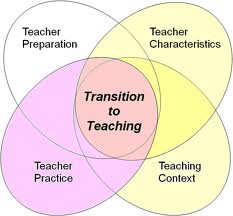
Speight is participating in PACE, which lasts three years and allows professionals to transition from the workplace to the classroom. Training sessions are filled with former marine biologists, lawyers, and engineers.

"You realize you are making a better future," Speight said. "I know it sounds cheesy but it's true."

He said moving out of the office and into the classroom is a easier than you think.

"You know what to emphasize and what to downplay," he said. "What's important, what's not."

While working in advertising Speight taught a class at USC.

"I had a student tell me they learned more from my class than they did in all their four years," he said.

State Education Superintendent Mick Zais said these new teachers bring a diversity of experience and background to the classroom.

"These folks have the ability to change childrens lives and I admire their decision," Zais said.

Speight is now at Chapin High School teaching entrepreneurship and marketing.

"It gives you credibility with the students because they know that you lived the material," Speight said.

Pace educators say they can put material more in context and bring the subject alive.

"Students are telling me how much I'm going to like reading their papers and they are really proud of the work they do, and work they thought they couldn't do," he said. "That's nice, that's a good feeling.

Professionals from other fields who transition into the classroom certainly bring maturity and probably a depth of knowledge about particular topics. But do you think we'll ever rebuild a culture that respects educators and their profession so much that little children will want to become teachers from the start, and parents will encourage their children to consider teaching as a career? Or are we locked into a culture that regards teaching as a second career or just a fallback position?

Thursday, June 16, 2011

Rainey: Haley "most corrupt person to occupy the Mansion"

The immediate past chairman of South Carolina's Board of Economic Advisors, John Rainey, issued a scathing indictment of Governor Nikki Haley to a national magazine this week, declaring that Haley is "the most corrupt person to occupy the governor’s mansion since Reconstruction."

Rainey is no lightweight; he is "a longtime Republican fundraiser and power broker who chaired the state’s Board of Economic Advisers for eight years," writes Corey Hutchins in the June 15 edition of The Nation, in a blistering article titled "Nikki Haley's Pay-to-Play Politics."

A 69-year-old attorney, Rainey is an aristocratic iconoclast who never bought the Haley myth. “I do not know of any person who ran for governor in my lifetime with as many charges against him or her as she has had that went unanswered,” he told me on a recent afternoon at his sprawling horse farm outside the small town of Camden. “The Democrats got Alvin Greene; we got Nikki Haley. Because nobody bothered to check these guys out.”

Hutchins's report examines the balance between Haley, the rising star in national party politics, and what Hutchins calls "a series of land mines -- IRS disputes, questionable business deals and appointments, multiple adultery allegations -- any one of which threatens to blow up her political career."

Haley's profile in The Nation isn't the first to examine her, but it may be the most cutting to date. Hutchens seems to leave no scandal unturned. He begins with a general overview of alleged cronyism:

When Haley took office in January, her backbencher status gave her no support structure in state government. Since then she’s appointed a surprising number of cronies and loyalists to bureaucratic functions in order to construct such a network. Many state boards have staggered terms to prevent unilateral decimation of institutional knowledge, but because former Governor Mark Sanford left so many appointees in place when their terms expired, there was a glut of personnel for Haley to dispense with as she pleased. At an early stage in the bloodbath, the capital city daily newspaper, the State, pointed out that of the fifty-nine she had already replaced, twenty-six were donors to her campaign.

Such wholesale housecleaning was not only sharply at variance with what the last GOP governor had done when taking over from a member of the same party; it also reeked of the kind of favor trading Haley had run against on the stump.

And he gets quickly to the decision to oust Darla Moore from the USC Board of Trustees, and the way it was done.

In March, without announcing it, Haley quietly excised the most generous benefactor of the University of South Carolina, billionaire financier and philanthropist Darla Moore, from the school’s board of trustees, replacing her with a campaign contributor and little-known lawyer from Haley’s district. When the alternative weekly Free Times broke the news of the move -- which led to student protests and a broader public backlash -- Haley was deceptive about her reasons for having made the change.

Haley’s office initially said she had wanted a “fresh set of eyes” on the board; Haley later told Washington Post columnist Kathleen Parker that she’d ousted Moore—who’d given $70 million to the university whose business school bears her name—for not returning Haley’s phone calls and postponing a meeting. E-mails and correspondence from Haley’s office, later made public, revealed, however, that Haley had chosen Moore’s replacement a month before trying to meet with her.

Hutchens notes that Haley's choice of Chad Waldorf to succeed Rainey as chairman of the state Board of Economic Advisors carries its own hint of backroom dealing:

To chair the state’s revenue-projecting Board of Economic Advisors -- one of the highest positions in state government that doesn’t require Senate confirmation -- Haley appointed Chad Waldorf, co-founder of a barbecue chain called Sticky Fingers. Waldorf also happens to be co-founder of a group that paid for a $400,000 pro-Haley ad buy during her gubernatorial primary campaign; the ads were pulled off the air by a judge who said the group appeared to have improperly coordinated with her campaign.

Meanwhile, after Haley lifted a hiring freeze set by Sanford, the Department of Parks, Recreation and Tourism created a job for the wife of Haley’s chief of staff, Tim Pearson. Pearson, who is being paid $125,000 -- $27,000 more than the man who held the post in Sanford’s office -- is a former Sanford aide who managed Haley’s campaign.

And in case anyone was wondering about the passion that Haley has shown in defending Boeing Corporation against a complaint by the National Labor Relations Board, Hutchens connects some dots:

Haley has ended up on Think Progress’s list of pay-to-play governors who solicited money to fund inaugural parties from corporations with vested state interests. One of them was Boeing, which last year moved an expansion from unionized Washington State to South Carolina, a right-to-work state, which earned the airline manufacturer a lawsuit (still pending) from the National Labor Relations Board. Haley has lately made national news by asking the GOP presidential candidates to stick up for Boeing.

And Hutchens uncovers a new issue that is fraught with ethical questions, this one around Haley's hiring of 32-year-old Christian Soura of Pennsylvania to help develop the "Department of Administration" she is pushing the legislature to establish. Soura is paid only one dollar year by the Haley administration, but there's a twist:

A bill currently moving through the state legislature would make the department a cabinet agency under the governor, allowing a governor-appointed director to oversee much of state administration.
...
While the dollar-a-year arrangement gives Soura access to state government, he’ll draw his real compensation from a newly created think tank, the South Carolina Center for Transforming Government, which doesn’t have to disclose its funding.

The murky nature of Soura’s presence has caused headaches for the new state treasurer, Republican Curtis Loftis. Loftis accuses Soura of undermining his authority, violating established protocols and circumventing the treasurer’s office by contacting services that determine the state’s credit rating behind Loftis’s back. “We don’t have any knowledge of who’s paying him or what his motives are,” a frustrated Loftis said recently. “We have an unknown dollar-a-year man.”

The article reviews the allegations made by two men who claimed to have had inappropriate relationships with Haley during her legislative career, and the questions swirling around her previous employment as a fundraiser for the Lexington Regional Medical Center, all of which can be read here for yourself.

But what seems to capture Hutchens's, and his sources', attention is Haley's political intentions. "Haley seems to be angling for a spot on a national ticket," he writes. At age 39, he notes, "She is already penning her memoir."

“Every governor we’ve had since Carroll Campbell has had national aspirations, but with her it’s more naked and obvious,” says Brad Warthen, a Columbia advertising man who until 2009 was the longtime editorial page editor of the State. Warthen endorsed Haley in two legislative elections and chronicled her rise beginning about seven years ago. In that time, he says, she has morphed from a naïve newcomer, to a politician he thought could become a good force in the legislature, to something approaching megalomania.

“I think she’s had her head turned by discovering where demagoguery will get you,” Warthen told me. “I don’t think that’s totally who she was before. I think she has developed in this direction. It’s a B.F. Skinner behavioral reinforcement thing; she has been rewarded and rewarded and rewarded. This has worked for her. And she continues to charm the national media. Because you know what? They don’t care. It’s just a story.”

But the story that’s been told nationally has a different tint in Dixie, one that belies any claim that white voters in South Carolina, which is nearly one-third black, have cast aside hang-ups over race by electing Haley. During her campaign, she embraced the most conservative ideas right down the line: laissez-faire capitalism, hostility to social programs and labor unions, cutting taxes, starving government.

“Nikki Haley could have been perceived as a black person in South Carolina because of her skin color and her eyes and so on, but she’s gone out of her way to say indirectly, ‘I’m not black, I’m white. I dress white, I talk white, I have white friends, I have white ideology,’” says John Crangle, a retired lawyer and political science professor who has run the state chapter of Common Cause for twenty-five years. “The subtext of everything she says is that we need to do less for black people in South Carolina, and that appeals to your traditional white Southerners -- the same people who voted for Nixon and the same people who are the base of the Republican Party now. But it also appeals to all these retirees that come in because they don’t want to pay taxes.” In the Palmetto State, it seems, an antigovernment stance that by default is anti-black still plays well at the polls -- especially when peddled by a minority politician.

Undergirding the trajectory of Haley's rise, Hutchens seems to suggest, is an overweening sense of hubris, a mixture of pride and arrogance that has come from the positive reinforcement Warthen mentioned and that seems to presage nothing but success in her future, at least in her own mind.

Hutchens concludes:

In late April, at a stop in Florence, during a series of speeches Haley was giving to commemorate her first 100 days, she told the small crowd, “There really are no mistakes we have made.” It was an astonishing claim, given the nearly daily reports of infidelity, dishonesty, conservative cronyism and pay-to-play politics. But the people of South Carolina are beginning to realize they’ve been duped. The question is whether the rest of the nation will get that same privilege.

What Constitution did Nikki Haley swear to uphold?

Why does South Carolina's present governor not support the public education system established in the South Carolina Constitution, the very Constitution she swore to protect and defend in her oath of office? Since taking her office in January, she has missed no opportunity to undermine, dismiss and promote alternatives to the system that serves more than 90 percent of South Carolina's school-age children.

And today's newspapers bring word that as lawmakers debate how to divide up a small windfall in unanticipated tax revenues, Haley has issued a veto threat if the legislature spends that money on our public schools. She demands instead that these funds be used, at best, to pay down state debt or otherwise to be refunded to taxpayers in the form of tax cuts.

It is, to put it generously, difficult to understand why a governor so despises the hundreds of thousands of children who attend public schools that she would withhold state funds from them, especially when the vast majority of lawmakers are willing to invest of the futures of those children.

And this is not a single veto threat, but a blanket veto threat in all future instances when the Board of Economic Advisors revises upward its revenue projections and additional funds become available.

Haley also said that, in the future, anytime a three-member panel of state economists increases its estimates of how much money the state will bring in, as it did last month, that money should go for tax cuts, rebates or to pay off state debt.

That position is certain to endear Haley to her Tea Party supporters, who say they are taxed enough already.

But it will upset others who say that, after cutting billions from the state’s general fund during the just-ended Great Recession, recovering state revenues should be used to restore services that were cut or can justify more support.

At present, the BEA calculates that the state has an additional $210 million above the earlier estimates that lawmakers used to draft their initial budget.

The Senate added $105 million for K-12 funding and $100 million to help businesses pay off nearly $1 billion in federal loans that the state took out to be able to continue paying jobless benefits after the state’s unemployment fund went bust. Some businesses saw their unemployment insurance bills increase six-fold after lawmakers voted to raise rates to repay the federal loans.

The House earmarked $146 million for business tax relief and added $55 million to K-12 funding. House members argued providing businesses more tax relief might encourage them to hire more employees.

Haley made it clear she does not like the Senate spending plan.

“If you’re not giving it in tax relief, if you’re not giving it to pay down the debt, you send it back to the taxpayers – that’s where it belongs,” Haley said.

If we follow that philosophy to its ultimate end, it means that once the state debt is entirely paid off, then the state government would cease to exist, having been gradually and completely de-funded.

It seems to suggest that Haley has a yet-undisclosed version of the South Carolina Constitution that tells her which state obligations and institutions are "core functions" and which are not. The version available to the public clearly establishes a system of free public schools, meant to be accessible by all of South Carolina's children, and this is the one to which she swore an oath to uphold in January.

By employing her line-item veto, Haley could make it much more difficult for lawmakers to increase state spending, deleting added money.

“From now, going forward, whenever money falls from that money tree – and it does every year – it’s not ‘Where do we spend it and how do we spend it?’ It’s ’Give it back to the taxpayer,’ ” she said.

Haley said she will target her budget vetoes at “anything that’s not that core function of government,” including ETV public television and radio, and the state Arts Commission. Asked if her target list of non-core functions included K-12 education, Haley responded only that the House found a way to balance its budget proposal without the additional money.

Are there, in fact, two versions of our state Constitution -- one for the governor, and one for the people?

Thankfully, someone else is asking questions about Haley's motives and veto threats.

But Senate Minority Leader John Land, D-Clarendon, said the state is not meeting its obligations for education and health care, having cut its budget from $7.3 billion in 2008 to $5.1 billion for the fiscal year that ends June 30.

Land recited a list of tax breaks approved by the state in the last decade, including the $100 million in unemployment tax relief to businesses, property tax relief, and business and personal income tax cuts. House lawmakers estimate they have cut $20 billion in taxes since Republicans took control of that body in 1995.

“You have too many needs that are going unmet,” Land said. “South Carolina has been very, very good as far as giving back to the taxpayer.”

All of which is further evidence that elections have consequences.

Should Bojangles assume government functions?

I'm imagining walking into a South Carolina classroom in the near future and seeing corporate logos on the doorways, windows and walls, the same way they festoon NASCAR racers. For example, "Today's lesson is brought to you by Fruit Roll-Ups." Or "Just do your best on the test: Nike." How about: "Drop those heavy books and pick up a Kindle."

Sounds farfetched? We already have corporate sponsorship advertisements on soft drink machines in high school common areas, and billboards ringing our sports fields and arenas.

Do we wonder why? It's due, in largest part, to the fact that corporate sponsors give funds -- in exchange for the rights to advertise to children in schools -- that our lawmakers choose not to give.

Everyone has seen some version of a bumper sticker that has made the rounds for a generation; it says, roughly, Imagine the day when schools have all the resources they need, and the Pentagon holds a bake sale to buy more jets.

No one is advocating weakening national defense, but the sentiment is sound. At the state level, our government leaves such a deep hole in education funding year after year that district school boards can only say yes when corporate interests come offering slight donations, regardless of the conditions.

So educators should be grateful, I suppose, when concerned businesses like Bojangles raises $20,000 from its customers for state teachers and public education, as reported this week.

More than 100 company-and franchise-operated restaurants across the state held a two-week in-store fundraiser where customers purchased $1 and $5 paper apples to honor teachers who made a difference in their lives.

Wednesday, the money raised was donated to South Carolina Future Minds, a nonprofit organization dedicating to supporting education.

Camden Middle School's Lori Cooper, who happens to be the 2010-2011 Kershaw County was selected from the thousands of teachers honored online and in Bojangles' restaurants during May's Teacher Appreciation Month Celebration and awarded with a five-night Caribbean cruise.

"In times like this where budget considerations or budgets are tough its wonderful to see a company reaching out and appreciation teachers and showing us that what we do really matters," said Cooper.

I love a two-piece dark dinner with dirty rice and iced tea as much as the next one, but I suspect Bojangles got the better end of this deal. How far do we imagine that $20,000 will go in filling the hole left by lawmakers? Not far. But advertising time on broadcast networks is expensive, and I bet several newscasts have already mentioned, or plan to mention, the effort made by the chicken chain to help our children.

Certainly, I thank Bojangles for making the effort.

But in an ideal world, our lawmakers would meet students' resource needs in the state budget, and whatever our business community wanted to do would be like the icing atop a Bo-Berry biscuit, not the biscuit itself.

Griswold: Protecting retirement benefits requires vigilance, participation

As president emeritus of State Retirees Association, Sam Griswold is one of the most trusted voices in South Carolina on issues related to the South Carolina Retirement System. Sam has drafted a year-end summary of legislative activities from the 2011 session and new developments affecting retirees (and those who hope one day to retire), and it bears reprinting and sharing with others.

Sam writes:

The State Retirees Association has been closely following the Restructuring Bill (H3066) favored by Governor Haley and passed by the House.

As passed by the House, the bill moved the Employee Health Insurance Program (along with a number of other functions currently in the Budget and Control Board) into a new Department of Administration in the Governor's Cabinet. The Retirement Systems would stay with the remains of the Budget and Control Board. We were very concerned about the separation from the Retirement Systems and possible rumored privatization of the Health Insurance Program. We mobilized retirees to contact their Senators and attend the subcommittee of the Senate Judicial Committee which was reviewing the House bill. We wanted Health Insurance and Retirement to remain with the Budget and Control Board or, even better, buffered from the political system by putting both programs under a Board of Trustees. We failed to do that at the subcommittee.

Efforts were enhanced and when the subcommittee made their report to the full Judiciary Committee there was standing room only in the Committee room. Gray heads flowed out of the room and into the hall. Every Senator had been contacted by retirees from their district. The bill was amended in full Committee to retain both the Retirement Systems and the Health Insurance Program under the auspices of the Budget and Control Board. An amendment was proposed but defeated to create a process which would culminate in the creation of a new Employee Benefits Agency to oversee these functions.

Pursuing the bill to the Senate floor, we conferred with several senators regarding the whole business. An interesting coalition developed among generally younger Senators from both ends of the political spectrum -- Democrats and Tea Party affiliates. They put forth an amendment from the floor. The amendment, offered by Senators Sheheen and Massey, abolishes the Budget and Control Board over a two year period and provides for the creation of a separate and independent Employee Benefits Agency. The amendment also calls for the creation of a transition committee of stakeholders to advise the General Assembly on the actual structure of the new agency and further stipulates that during the transition period no changes can be made to retirement and insurance benefits without a unanimous vote of the Budget and Control Board. The amendment passed 43 to 0.

Most of the remainder of Budget and Control Board functions would be put into the new Department of Administration. We liked this version.

By now everybody has probably heard that the Senate adjourned without taking a final vote on the Restructuring Bill (H3066). Governor Haley heard about it and almost immediately signed an Executive Order directing the General Assembly to return to work the next week. The House leadership said they would, the Senate leadership said they would not. Senator McConnell then took the issue to the Supreme Court to determine if the Governor had the authority to call them back. The Court found against the Governor and they did not reconvene.

While final passage is not a certainty, we have come a long way since that cold winter day when so many of you attended the Senate Judiciary Committee and helped us keep health insurance out of the Department of Administration. You helped us stop a runaway train and in doing so helped to set the debate that culminated in the Senate's vote. You proved that we citizens can make a difference if we put forth the effort to participate.

The legislature is in session now for two weeks to deal with a limited agenda of vetoes, the budget, redistricting, and voter I.D. Governor Haley also wants them to deal with restructuring but it would take a 2/3 vote to put it on the agenda. It is unclear if they will have the votes to do that. If they do not take it up, it will be high on the agenda when they convene in January.

One final thing: The Budget and Control Board met on Tuesday, June 14 at 10:00 A.M. An agenda item created by State Treasurer Curtis Loftis proposed to increase the employer contribution into the Retirement Fund and thus maintain the appropriate contribution level to put amortization of the unfunded liability of the Fund into compliance with Government Accounting Standards. This motion failed for lack of a second.

Technically, payment of this contribution is not necessary until the fiscal year starting July 1, 2012. But Treasurer Loftis believes, and we concur, that taking this action now would help preserve the credit rating of the State. So here is another drama that we will have to follow.

The Board also did not address the issue of the assumed rate of return on investment of the Retirement Fund which means state law will automatically trigger a 1.7% cost of living adjustment for retirees effective July 1 and in the benefit check August 1. Hooray for that law that we got passed in 2008. Active participation works!

Our ultimate goal is a fiscally sound retirement and health insurance system that can meet the needs of government employees in our state for the foreseeable future.

But lots of money is involved here: $1.7 billion in annual expenditures for health insurance and a Retirement Fund in excess of $25 Billion. Whenever that much money is on the table, there are an infinite number of people who want a piece of that pie.

But it is OUR pie and worth fighting to keep. These are your dollars, put there for your benefit. They allow you to live the final years of your life in dignity and with the care you will need. We need to ensure that's how these dollars are spent and that they are not spent on the ambitions or greed of any politicians or outside entities. Help us keep it that way.

Wednesday, June 15, 2011

Lawmakers, listen to what matters to parents, educators

For those who may have missed this great column published last week by Philadelphia parent and writer Helen Gym at CNN.com, it's worth reading and forwarding to friends and colleagues. CNN describes Gym as "founder of Parents United for Public Education, which seeks classroom-centered investments in education budgets. She is a board member of the Philadelphia Public School Notebook, where she contributes online commentary. She helped found the Folk Arts-Cultural Treasures Charter School in Philadelphia Chinatown and was named the Philadelphia Inquirer Citizen of the Year for 2007 for education activism."

Gym's column reads,

Many of those who are driving education policy today are fixed on a certain set of numbers and measurements that we're told are the way to gauge a quality school. But as a parent, that's not really what matters to me about my daughter's education.

I can't tell you the number of her standardized test score from last year. I can't tell you the name of the curriculum program her school uses for math and reading. I don't know the pay scale of each of her teachers and whether that contributes to their malaise or enthusiasm in the classroom.

But here's what I can tell you about my daughter's education.

I can tell you the name of the history teacher who inspired her this year, the book that she loved and couldn't stop talking about and the topic of the reflective essay she labored to write and rewrite.

I can tell you which teachers gave homework assignments that made some of our family evenings perfectly miserable and the community service projects that had our whole family out cleaning the streets or readying a garden.

I can tell you what it felt like when the principal of a school shrugged her shoulders after I complained my daughter had been pushed down the stairs (we left that school) and what it felt like when the new principal stood outside greeting children by name as they entered every morning.

I can tell you that my mother cried when my youngest daughter's school choir sang "Arirang," a traditional Korean song, and that I loved every squeak and clank of the school orchestra.

I can tell you all of these things because as a parent, the true meaning of a quality school lies in a strong child- and family-centered educational mission that recognizes education as a "process of living" and school life as "real and vital" to our children and families, as American philosopher John Dewey wrote more than half a century ago.

This is what matters to me, but it's apparently not a priority when it comes to national debates about education reform. For many parents, the elements of what makes a quality school seem completely at odds with the national buzz about education reform:

-- While parents talk about programs rich in the arts, sciences and history, politicians talk about covering the basics through a one-size-fits-all curricula.

-- While we talk about building critical thinkers and creative problem-solvers for a complicated and dynamic world, they talk about hiring billion-dollar testing companies that infiltrate every aspect of teaching and learning, drilling the notion of knowledge down to a single test score.

-- While we talk about smaller class sizes to help students and teachers build nurturing relationships with one another, they talk about maximizing capacity and "creating efficiencies."

-- While we talk about building an experienced, stable and professional teaching force where teachers are prepared with a depth of knowledge in their subject areas and are committed to the profession, others talk about relying on a temporary teaching force or focusing on education managers.

-- While we talk about sustainable change based upon policies that have been proved to work, politicians and the private sector demand dramatic and disruptive changes that do little to significantly improve children's educational experiences.

And in this lies the critical difference between what many parents see as their hopes for a quality school system and the politicians and billionaire venture philanthropists dominating the education reform landscape. The latter have become so enamored with the structure and management of education that they've forgotten about the substance and practice of it.

So if this is what's meaningful to parents and families, how can policymakers help to support those goals?

They can start by listening to what parents around the country are saying we need our elected officials to do. Parents Across America, a national organization of parents, recently released its own blueprint for school reform.

Among the suggestions: Address the dramatic inequity in resources within and among school districts so we can maintain smaller class sizes and early childhood programs. Create strong, effective support for teachers, provide a rich well-rounded curriculum, and create multiple ways to evaluate teaching and learning. Make parental involvement meaningful and include roles for governance.

In her book "The Next American Revolution," Detroit activist Grace Lee Boggs decries a system of education that views children as passive receptacles of information that routinely passes as knowledge. Instead, she challenges us to give our children the kind of education that creates tomorrow's leaders by unleashing their creative energy "to heal the Earth and build durable economies and communities," "create a vibrant society" and a "democratic citizenry."

This is the direction our nation should be moving in, with elected leaders working alongside parents and community members to truly transform our schools.

Herald-Journal: "Public education is not some leftist tenet"

Hosanna.

Why does it take a potential electoral crisis -- six Upstate lawmakers appear to be in hot water for their votes against the most recent iteration of ye olde Sanford-Haley voucher scheme -- for one of the state's daily newspapers to make such a plain and clear defense of public education in South Carolina?

Similarly, why does it take such a crisis for one of our daily papers to openly defy the anti-public education group "South Carolinians for Responsible Government"?

SCRG, whose funding is believed to have roots in New York City and elsewhere (so says A, and B, and C, and D, and E, and F), has played The Woman Scorned since the legislature in May defeated the 2011 version of the same old voucher (or tuition tax-credit, take your pick) plan that Governor Mark Sanford first tried to sell us in 2003. It appears that some of Spartanburg's own lawmakers, including some who have, at one time or another, advocated some sort of school reform, and who may even have accepted campaign donations from pro-voucher sources, are among those who voted down the voucher plan. So these have been branded with their own numerific label -- the ominous "Spartanburg Six," like the "Fab Four" or the "Dirty Dozen" -- and the modern Red Shirts are out for revenge in the name of ideological purity.

It's this purity that the Herald-Journal's editors take up in yesterday's edition, writing, "It’s an odd assertion that a 'true conservative' is someone who wants the government to subsidize private education and that those who want to protect the public schools are somehow phony conservatives."

Indeed, the earliest South Carolinians who advocated for free public education for all of its children were conservatives -- and pro-business conservatives, at that.

But that’s the allegation six Spartanburg lawmakers are facing. They voted against the latest school voucher scheme and fell afoul of the groups established with out-of-state money to push this agenda in South Carolina. They also angered some tea party groups that are quick to believe any allegation of phony conservatism.

The truth is that the Spartanburg Six — Reps. Rita Allison, Steve Parker, Eddie Tallon, Mike Forrester, Derham Cole and Doug Brannon— did the right thing.

The measure billed as “school choice” would not have opened up new choices to parents or children. Its overall effect would have been to make private school more affordable for parents already able to make that choice. It offered such parents a tax credit to help pay the tuition. Poor parents, who can’t pay the tuition up front and don’t make enough money to take advantage of the tax credit, would have been left out in the cold. The bill offered them only the unlikely promise of privately financed scholarships.

The bill would not have improved any schools. It would have taken scarce resources away from the public schools, and it would have eroded the independence of private schools. Government money always comes with government strings. If this voucher bill had passed, it would have been only a matter of time before the General Assembly applied its accountability system and school report cards to private schools. Lawmakers would have declared that the state could not be subsidizing private schools without holding them accountable. Sooner or later, private schools would have to adopt the same tests and curriculum as public schools.

It’s time to get past the lie that parents who pay to send their children to private schools pay for education twice, or that they pay for schools they don’t use. The truth is that we do not pay taxes to support public schools solely to educate our own children. We support a public school system so that we can live in an educated society. We support a public school system because the alternative is an illiterate populace, rampant poverty and a hopeless future.

This has to be the most rational editorial published by the Herald-Journal in recent memory. And though it doesn't name SCRG, the editorial may as well be an open letter to that group and its out-of-state sponsors.

The Spartanburg Six voted to protect the public schools because they recognize that there is no reasonable alternative. It’s not because they don’t want parents to have choices, but they recognize that there will be no free-market utopia where tax credits allow all parents the choice between excellent private academies and the government is out of the education business. That plan simply isn’t realistic.

The Spartanburg Six are not slaves to the teachers’ unions or some liberal agenda. Public education is not some leftist tenet. It is not some new liberal invention. It’s the method this nation has used for generations to create the success we have had. That system isn’t perfect. Our schools are struggling in many ways, but voucher schemes like the one rejected by the Spartanburg Six would not help.

Read these words again: "Public education is not some leftist tenet. It is not some new liberal invention. It’s the method this nation has used for generations to create the success we have had."

What a statement, a declaration of the true good that went into establishing public education and the true good that has come -- and continues to come -- from public education. So I repeat my question: Why does it take a potential electoral crisis for one of the state's daily newspapers to make such a plain and clear defense of public education in South Carolina?

I hope that every district superintendent in South Carolina sends a printed copy of this editorial to every principal, teacher, secretary, custodian, cafeteria worker and bus driver in South Carolina with a thank-you note, as an illustration that there is a strain of common sense and decency that runs underground in our state, that the thankless work our public school personnel do is important, and that the occasional and slight scraps of support issued by a public voice ought to be held up and celebrated. Give the editors of the Herald-Journal some positive reinforcement for their declaration, whatever their motivation, and they may feel courageous enough to say it again, and again.

Contact the editors here (area code 864):

Horeth, Chris - Perspective, letters to the editor
chris.horeth@shj.com Phone: 562-7267
Parris, Lou - Stroller
lou.parris@shj.com Phone: 562-7204
Smith, Michael - Executive Editor
michael.smith@shj.com Phone: 562-7200

On the same day, in the same edition, the same editors invited Rep. Doug Brannon to publish a column explaining his choice to oppose the voucher scheme. It, too, bears reading, and Brannon deserves the same thanks for standing up for public schools.

If the legislature hadn't gone to such a Byzantine system for email communications, I'd post Brannon's email address to make it easier to thank him. Instead, call his legislative office and leave a message of thanks: (803) 212-6876.

Brannon writes in the Herald-Journal:

After significant thought on my part and the urging of many, I decided to write this to explain why I made the motion to table and voted to table H-3407 (the South Carolina Educational Opportunity Act).

There are four primary reasons the motion to table was made.

Reason 1: The cost of H-3407 in terms of reduced general fund revenue is impossible to calculate. Under the proposed bill, there are no limits put upon the amount an individual or corporation may contribute to a scholarship organization, no limit to the number of scholarship organizations that can be formed, and the bill allows for "stacking" of tax credits in such a way that multiple taxpayers could claim tax credits on the same student. Under this proposed bill, all taxpayers could have eliminated 95 percent of their state tax liability.

Reason 2: This bill offered choice to a limited group of taxpayers, and none of these groups was the intended benefactor. Under H-3407, a private school could choose to accept new students or scholarship students. There was no mandate that private schools join in this choice plan. Corporations or individuals could choose to make contributions in lieu of paying state taxes, and those families that can currently afford private school tuition could choose to take a tax credit against their state tax liability.

The average annual tuition at a private school in South Carolina is $8,720.36 Under H-3407, the total scholarship available to low-income families (the only families that qualify) during the first year is $2,878.00. Who will pay the difference? For families that do not qualify for a scholarship, a tax credit is available in the amount of up to $2,878.00. A tax credit does not result in a tax refund. A tax credit does not put money in your hand.

In South Carolina, there are 149 private schools. Of those, 119 are church related. If a private school that is affiliated with a church accepts a scholarship student, under this bill, that school may not ask that student for a profession of faith, to worship or to pray. We would be asking private church-related schools to create a separate secular curriculum. Do we really want separate but equal again?

Reason 3: H-3407 may not be constitutional. In Williams v. Illinois, the United States Supreme Court said that "a law nondiscriminatory on its face may be grossly discriminatory in its operation." As stated here, this bill did not offer choice to the low-income or those in failing schools — it offered choice to those who can afford it.

Reason 4: One person's choice should not come at the expense of others. Because this bill would have resulted in a significant reduction in general fund revenue, this so-called choice would have come at the expense of others in the form of less money for other services provided by the state of South Carolina.

I encourage each of you to read H-3407. Please see for yourself the flaws in this bill and why it was bad for South Carolina.

Local budgets bring "the stretchout" to classrooms

When the locations were South Carolina's textile mills, this strategy was called "the stretchout." After Congress enacted the first minimum wage law, mill owners cut their workforces, leaving fewer millhands to run more looms for longer hours. In the great 1995 documentary "The Uprising of '34," the sons of mill owners characterized it blithely as an "efficiency technique." But the millhands and their own children got the message: Keep workers hungry and they'll be grateful for their job, regardless of the conditions you dictate.

Mills aren't the only places where "the stretchout" has been applied in South Carolina; schools are another great place to see this fine "efficiency technique" in action. It is so common that it's axiomatic nowadays: When budgets get tight, lawmakers cut school funding, local districts cut worker rolls, and the remaining workers -- grateful to still have jobs -- take up the slack.

This week's newspapers have published such news but have done it with a rosy tint. The headline from Monday's Post & Courier in Charleston reads, "Charleston schools cut 70 jobs to help save money." Cutting jobs equals being helpful.

Writes Diette Courrégé in that edition,

Charleston County school leaders will lay off 70 people next school year to help balance their budget, and instructional coordinators and mechanics make up the majority of the jobs being eliminated.

The school district released the names of the positions that will be cut next year to save more than $2 million, and the biggest group of affected employees include 24 instructional coordinators who work as curriculum coaches for teachers and 19 mechanics, most of whom were dispatched to schools for maintenance work on an as-needed basis. A total of 22 types of positions were touched by the layoffs, and those included secretaries, technicians, an associate superintendent, and student support facilitators for career and technology education.

'Tis a strange beast, our state government: It demands certain kinds of paperwork, for instance, done traditionally by a school's secretarial staff members. When those staff members are cut, our state government does not reduce its demand for this paperwork, so the work must be accomplished by others who aren't secretarial staff members. That means the district's remaining teachers will do it -- perhaps in their spare time.

Likewise with other job titles being cut (or "reduced" or "eliminated by attrition," or "right-sized," or any of various other euphemisms that mean job cuts), the workload remains the same, but the number of people responsible for doing the work shrinks. Fewer people doing more work; that's the old "stretchout."

Gina Vasselli of the Sun-News in Myrtle Beach gave a similar report in her paper on the same day. The Horry County School Board gave its budget final reading on Monday evening, and Vasselli noted beforehand:

A budget that includes a net tax decrease for taxpayers is up for final reading at the Horry County School Board meeting tonight.
...
The $513 million budget is balanced and, in addition to the tax decrease, includes restoring a salary increase for qualified employees, no changes in the teacher-student ratio, and no layoffs or furloughs.

Some positions at the district have been cut, but are the result of a previous decision to fully enforce allocation formulas, which determine how many positions each school will have based on student population.

Translation: No layoffs or furloughs are included in the proposed budget for next year because positions were cut in this school year, but even those job cuts are good because they only "enforce allocation formulas." They sound completely painless. I wonder if those now-unemployed educators even had names?

The stretchout isn't just being implemented on the Grand Strand and in the Low Country. Check your own local school district budgets for the past two, three, five, seven years and you might find a good bit of stretching-out happening in your own backyard.

Yesterday, word came from the Spartanburg Herald-Journal that it's being applied in schools in the original mill country's old stomping grounds again. Spartanburg District 1 approved its budget on Monday, and it's a much healthier budget than last year's, assuming that the General Assembly passes hoped-for school funding. Reporter Lee Healy writes that it reflects work "to slowly rebuild what several years of recession budgeting has torn down."

Some savings come from cutting 25 full-time positions from the new budget, including 12 teachers. The staff reduction, achieved primarily through retirement and voluntary severances, will save the district about $721,000. [Superintendent Ron] Garner said the cuts will affect class size in some areas, bringing teacher-student ratios to do-able, but not ideal, levels.

“There's just no way to get around (increases in class size) when you cut that many positions,” Garner said. “We're still at a good level, but we do not want class size to get to a point that's unsustainable.”

See it: Cut worker rolls, maintain the demand for production, and leave the remaining workers -- grateful that they survived the cut this time -- to take up the slack.

Superintendent Garner said one thing that jumped out at me:

“I am encouraged that the base student cost is greater this year than it was last year, but I am prayerful that the base student cost will get above the mark that we were at in 2009-10, when we started this slide,” Garner said. “We're still way, way off the mark.”

For this superintendent -- and probably a great many others -- getting necessary results from lawmakers in Columbia is a matter for prayer.

It reminded me of the old Charlton Heston film, "The Ten Commandments," when Pharoah commanded Hebrew slaves to produce bricks without straw, partly as punishment and partly because old Pharoah didn't want to spend any more of the royal kitty on straw. The Hebrews turned to God for relief.

But Pharoah ran a dictatorship. South Carolina is, at least on paper, still a democracy in which citizens have the rights to choose their representatives, to speak out in protest when those representatives fail their constituents, and to petition government for redress of grievances. Isn't it? If so, perhaps we need to plan some public prayer vigils when we can have some good old-fashioned discussions about "the stretchout."

Shall we invest in children, or pay business to hire workers?

That's the choice being described in today's The State, as lawmakers get back to work on the $5.8 billion budget plan -- the plan that is supposed to become effective July 1.

The State explains:

The Senate budget would split money added by growth in the state's economy -- with $100 million paying for business tax relief and $105 million paying for K-12 education.

House members want $150 million in tax relief for businesses. Their insurance rates rose to start repaying almost $1 billion in federal loans that the state had to take out in order to continue paying unemployment benefits after the state's unemployment insurance fund went broke in 2008. For some companies, taxes increased by as much as 600 percent per employee, and companies have said the tax hike might cause them to delay hiring.

Debt from poor legislative choices -- or was it former Governor Mark Sanford's decisions that led to the depletion of the unemployment insurance fund? -- now leave the state's children in want, with lawmakers mulling over whether to give them half-loaf or a quarter-loaf.

It is as it has been for all of South Carolina's generations: Our decisionmakers see the needs but find all manner of competing interests to drain the treasury before getting to the question of giving every child access to a quality education.

Who wins? That's been the same for generations, too.

State Rep. Dan Cooper, R-Anderson, the House's top budget writer, says the debate over spending on education or tax relief is the biggest remaining issue. An agreement could be worked out this week, he added.

Tuesday, May 31, 2011

Educators praise voucher defeat (2011 edition)

Everybody's heard Einstein's famous quote about insanity: it's defined as doing the same thing over and over again, expecting a different result. To my knowledge, Einstein never came to South Carolina, where our legislature could have schooled the fella.

Hasn't it been the case for the past decade?

We have, in Columbia, a Legislative Homeowners Association. What most of the neighbors have in common is shared wariness and a shared commitment to maintaining some minimum standards -- by minimum, I certainly mean "minimally adequate."

And in our neighborhood, we have a small gang of elected malcontents who aren't satisfied that South Carolina is already trapped in the Wayback Machine with the controls broken off at "Eisenhower."

By the front entrance to our neighborhood is a monstrosity on cinderblocks: our rusty, antiquated system of funding our public schools. Everyone sees it, with its dented 1977 license plate, its yellowed diamond-in-the-back, surrounded by patchy poke salad. It's a blot that gives the whole neighborhood a bad name. People from other neighborhoods -- yonder in Georgia and North Carolina and beyond -- see it and feel smug, superior, better than us.

Our Legislative HOA could fix matters altogether, of course. Raise HOA dues a little, based on property value, and have the decayed monster removed and replaced with something nice and functional. But nobody wants their dues increased, especially not based on property value.

Yes, to some degree, the HOA majority is ashamed of the decayed and neglected school-funding structure in their front yard, but they take so much pride in their live-and-let-live by-laws and covenants that they're loathe to take action, to change the rules, to rewrite the budget, to replace that rusted monstrosity with a school-funding system that works for all kids and their parents.

So the HOA does what it normally does: It pays to have more cinderblocks propped up beneath the chassis, so it doesn't completely fall down.

This, of course, angers the little gang of malcontents, who introduce bills year after year to eliminate the cinderblocks and pay parents to send their children to private schools.

And how does the HOA leaders handle the gang and its bills? They wait until the last minute, give the malcontents time to air out their year's-worth of wingnut angst, then drop the boom on the plan -- usually without a lot of fanfare.

And what happened last week at the State House? Seanna Adcox of The State reports it:

The latest plan to use tax credits to help parents send their children to private school died by slim margins Wednesday in the South Carolina House.

With no debate, representatives voted 60-59 to reject the measure. In a subsequent vote of 61-59, the House refused to reconsider - officially killing the bill. It was a stunningly swift vote on the contentious issue that keeps popping up in the Legislature.

The same bill was rejected a month ago by the Senate Education Committee, also with very little discussion. Senate Education Chairman John Courson said then that lawmakers knew where they stood philosophically on the issue.

And what did the malcontents say to this -- yet one more -- defeat at the hands of the bipartisan majority?

Despite the rejection in both chambers, the group pushing the effort pledges to return for another round.

"We're excited it got that close. We've always seen this as a long-term pursuit," said Neil Mellen, spokesman for South Carolinians for Responsible Government.

See what I mean about schooling Einstein on insanity?

Educators roundly praised the move. Jackie Hicks, president of the state's largest association of education professionals, The SCEA, credited educators themselves with pressing their lawmakers with facts and figures:

These victories in both houses of the Legislature, are the culmination of months of work by the members, leadership, and staff calling the disastrous consequences of this legislation to the attention of lawmakers, policy makers, the media and voters. This is a victorious end to an historic campaign. We spared no effort.

The SCEA campaign began by developing and leading a statewide coalition of civic, educational, and religious groups that were committed to quality public education. The SCEA then commissioned an independent poll of SC residents and learned that a whopping 64% of residents opposed sending millions of dollars to private schools at taxpayer expense.

Armed with this support, The SCEA president, vice-president and other members testified before both houses of the legislature. The SCEA submitted letters to the editor and op-ed articles to the state’s newspapers, noting that the bill would be too expensive and that South Carolina schools need reforms that are proven to work and will prepare our students for the jobs of the future.

Likewise, leaders of the state's association of school boards pointed to the influence of citizens who pressured lawmakers to face facts.

"The bipartisan vote sends a very clear and resounding message that the citizens of South Carolina are not interested in abandoning our public school students," Paul Krohne, executive director of the state School Boards Association, said in a statement. "If nothing else, this issue has galvanized those of us in South Carolina - and there are thousands - who reject the abandonment philosophy."

"The abandonment philosophy." We've come a long way, haven't we, from the same Eisenhower era that malcontents among us recall so fondly, when neighbor cared for neighbor? Today, it's every man for himself, and the most successful among are the ones who collect the most toys -- and who abandon the rest.

The State rightly pointed out the influence of "out-of-state money" fueling this issue. If NCLB has proven anything to the business community, it's that there's billions of dollars to be made in education, if education can be yanked out of the public domain and planted squarely in private enterprise. Privatizing school buses? That's child's play, a piker's game. Wait until public education is shut down and parents are forced into the private market for their children's education -- and the profits begin to roll like mighty waters. Pay attention: There's a reason that Australian billionaire and Fox News Channel owner Rupert Murdoch just purchased 90 percent of an education software company -- and vowed to use his News Corporation to make public education a high-priority issue in the 2012 presidential election.

It's hard not to remain a little skeptical about the timing of this entire ordeal.

At the end of 2010, Rupert Murdoch's News Corp paid almost $400m in cash to purchase 90% of Wireless Generation, a company that bills itself as "the leading provider of innovative education software, data systems, and assessment tools for reading, writing and math,"

On Tuesday, News Corp announced "The Future of American Education: A Presidential Primary Forum."

And lest we forget, voucher bills have always been about money -- not education.

The basics of the latest plan were the same as previous ones: The bill would give tax breaks to parents who can afford to pay tuition up front, while parents could apply for scholarships. The people and businesses that donate money for those scholarships could take the tax break.

The key differences were that the amount of tax credit or scholarship would vary by district, and that parents with children already in private school would get no break for several years, and then a reduced amount. The tax credit or scholarship would be tied to half of whatever the state spends on a public school student there. Next school year, the statewide average would be $2,417.

Tuition at the state's elite private schools can top $18,000 per student. Opponents have said the proposal is geared to well-off parents, since tuition would remain out of reach for poor students, even with a scholarship. But advocates said the average cost of tuition across more than 300 private schools statewide is $4,400.

And so long as the Legislative Homeowners Association honors its laissez-faire by-laws and covenants more than its commitment to funding a good education for every child, the malcontents will keep coming back. After seven years of trying, they've gotten a taste for it now.

“We’re gaining ground every year,” said state Rep. Bill Herbkersman, R-Beaufort, a tax credit supporter. “This was the closest vote yet.”

Thursday, May 26, 2011

Congratulations to seven schools for Exemplary Writing Program Awards

While we're recognizing schools for great achievement, we should mention the seven who have just won an Exemplary Writing Program Award.

The winning schools were Nevitt Forest Community School of Innovation (Anderson District 5); Pate Elementary (Darlington County); Doby's Mill Elementary (Kershaw County); Heath Springs Elementary (Lancaster County); Irmo Elementary (Richland/Lexington District 5); Woodruff Primary (Spartanburg District 4); and Monarch Elementary (Union County).
...
The Exemplary Writing Program is sponsored by the South Carolina Department of Education and governed by the Writing Improvement Coordinating Council. The award is based on an extensive evaluation of the schools’ instructional programs, with a particular emphasis on the teaching of writing.

Last fall 25 schools submitted written applications responding to 10 criteria of excellence that comprise the Exemplary Writing Program.

The applications detailed how each school implements its writing program with reference to leadership, faculty knowledge of research and theory, curriculum, assessment and community partnership.

From this group, 12 schools were chosen for site visits.

Three separate reviewers scored applications, and site visits were conducted by at least two reviewers. The schools that met the rigorous criteria of the program were designated as Exemplary Writing Program Schools.

Caroline Savage, from the Education Department’s Unit of Literacy and Early Learning, said the Exemplary Writing Program provides tools for schools to self-assess their writing programs as well as a series of professional development sessions based on criteria for effective school writing programs.

Savage said schools that have gone through the three- to five-year process of developing an exemplary program credit EWP as the key to their success.

Congratulations to the classroom teachers and education support personnel to taught and supported learning this year in English classes, communications skills, language arts and particularly writing.

To ALL those who teach our children to read and write, thank you.

Beaufort County makes slow progress in funding public schools

On its surface, an item published in Bluffton's newspaper offers cause to celebrate on behalf of the public schoolchildren in that district. According to that paper, thanks to infusions of funding from federal sources, the district spent $10,606 per student in the last fiscal year (2009-2010).

I say it offers cause to celebrate because it has taken 341 years for Beaufort County's children to be afforded reasonable funding for their education.

Quick history: First permanent settlers arrived at Charles Towne in 1670; first law to establish statewide system of public education was passed in 1811; and the first state public-school funding law (the Education Finance Act) was adopted in 1977, though lawmakers have undercut that law and funded less than its formula required in far more years than it fully-funded the law.

So to see in a headline that Beaufort County's public schoolchildren are finally getting the benefit of $10,606 in educational opportunity each is heartening, and to see that the calculators aren't throwing in the kitchen sink to artificially inflate the figure is even better.

Funding came from not only the $171.4 general fund budget of that year, but also included state and federal dollars allocated for specific educational uses (from special revenue and Education Improvement Act), stimulus funds ($8.9 million), and monies generated through the food service fund for student nutrition and money generated by and used by students in the student activities funds.

While Beaufort County Council approves tax millage, thus controlling revenue for the school district’s general fund, the general fund funds part but not all of the school district’s total budget.

The $220 million the state department used for the cost per student in 2009-10 does not include $163.6 million in 2009-10 for “capital and out-of-district obligations,” including $112.1 million for capital projects, mostly due to building six new schools. (In 2008, the total was just $19 million.)

In 2009-10, the district also spent $49.1 million for debt payments and $2.4 million for Riverview Charter School. All told, the district spent $373.6 million last school year.

“It has been our practice not to include (capital and out-of-district) amounts because they are various from year to year and are not considered as operating expenditures,” said Mellanie Jinnette, a financial systems manager for the South Carolina Department of Education.

Phyllis White, chief operational services officer for the Beaufort County School District, said any special revenue or grant money received can inflate the cost per pupil, as stimulus funds did in 2009-10. In 2009-10 the district received $760,000 in energy grant money.

“Any grant (free money), including teacher grants, will be included in the per pupil amount,” White said. “That’s the danger in publishing this type of information: Unless you know all the details, it can be very misleading. It is also important for comparison purposes, rather than total cost per pupil, to look at the percentages in each of the categories. I usually compare us to other districts to see how we measure up.”

Congratulations to the public schoolchildren of Berkeley County

Berkeley County's public schools clearly are serving students well, as 36 of these have been recognized as Duke TIP Scholars and more than 150 others have been named South Carolina Junior Scholars -- a district record.

Every year, Duke University’s “Talent Identification Program” (TIP) identifies academically qualified seventh-graders and invites them to complete college entrance examinations (SAT or ACT) alongside high-school students. They are provided with detailed information about their test scores and abilities, and are introduced to a variety of academic resources, such as summer programs, field studies and scholar weekends.

“The purpose of the program is to recognize students with exceptionally high intellectual ability, and to provide opportunities for them to broaden that ability,” said Merrie Fisher, Coordinator of Academic Programs. “We are thrilled with the number of students who achieved Scholar status this year.”
...
The Berkeley County School District also named 156 students as Junior Scholars, a district record. Scholars are invited to participate in the district’s free Junior Scholar Institute, taking place July 11-21 at Westview Middle School. This rigorous summer program offers courses such as physics, world issues, language immersion, creative writing and technology. They also receive an ‘Award of Merit’ certificate from the South Carolina Department of Education, and may be invited to attend summer opportunities at participating South Carolina colleges and universities.

Here's to the fine classroom teachers and education support personnel who bring great educational opportunities to Berkeley County's public schoolchildren every day: Congratulations.

Congratulations to Indian Land Middle School

There's plenty of evidence that great things happen in South Carolina's public schools; it's our responsibility to bear witness and tell those stories. Today, Indian Land Middle School is an example. ILMS is one of 10 schools nationwide being recognized for its character-building program by the Red Robin Foundation.

And talk about a good community partner for public schools: the Red Robin restaurant chain has been recognizing schools this way for the past five years.

But Indian Land Middle School is no stranger to praise; for two years in a row, ILMS has been named a State School of Character by the state Department of Education -- the only middle school in South Carolina to collect this honor.

Here's the note from the Lancaster News:

Indian Land Middle School is one of 10 schools in the country honored as a 2011 U-ACT School by the Red Robin Foundation. The acronym “U-ACT” stands for “Unbridled Acts,” or random acts of kindness. Red Robin’s U-ACT program recognizes schools that demonstrate a commitment to promoting kindness and is dedicated to character-building in grades six through eight.

The honor of being designated a U-ACT Merit School entitles ILMS to a $1,200 grant and $250 for a party to reward students.

ILMS Principal David McDonald said the program reinforces the school’s motto: “What happens here will change the world.”

“Our school is not perfect, and that is exactly why it is important to have a focus on character-building efforts,” he said. “The support from the Red Robin Foundation has allowed us to ‘kick it up a notch’ and continue to provide creative ways to model, teach and expect positive character traits.

“We are so pleased to be recognized as one of the top 10 schools in the nation for our commitment to providing a program that helps us teach kindness toward others,” he said.

The U-ACT winning schools were selected based on the unique programs they implemented throughout the school year to reward students for their kind acts and the community service projects they implemented to make a difference in their communities, a Red Robin Foundation release said.

Among the programs implemented by ILMS that helped earn them this recognition were the Champions of Character Program, Character Counts Week, A-OK Week and Pasta for Pennies.

To lower dropout rates, teach young children to love reading

Sometimes, the simplest solutions are the best ones.

A study from the Annie E. Casey Foundation suggests that we should start addressing the dropout problem well before children become teenagers. It turns out that reading to small children, and encouraging them to read, may be the most effective strategy to reduce the high school dropout rate.

It's a challenge, sure. South Carolina's lawmakers have never been keen on long-term strategies, as the business community measures its profits and losses in quarterly reports. But if we're serious about fixing the dropout rate, maybe we ought to pay attention to this one.

Children who aren't reading proficiently by third grade are four times more likely not to graduate high school than their peers with higher reading skills, according to a report issued Friday.

Students in low-income families fared even worse in a longitudinal study of 3,975 children born between 1979 and 1989, according to Double Jeopardy: How Third-Grade Reading Skills and Poverty Influence High School Graduation, a report commissioned by the Annie E. Casey Foundation and presented during the Education Writers Association's national conference in New Orleans.

"We will never close the achievement gap, we will never solve our dropout crisis, we will never break the cycle of poverty that afflicts so many children if we don't make sure that all our students learn to read," said Ralph Smith, the foundation's executive vice president, in a statement. "This research confirms the compelling need to address the underlying issues that keep children from reading."

The Casey study finds that one-sixth of third-graders who don't read on a third-grade level don't graduate on time. Of those third-graders measured to have the lowest skills level -- "below basic" -- almost one-fourth drop out, compared with nine percent of children who demonstrate the "basic" skills level and four percent of those who demonstrate "proficient" reading skills.

A second large theme found by the Casey study is the role of childhood poverty.

Overall, 22 percent of children who have lived in poverty do not graduate high school, compared with 6 percent who have never been poor. And 32 percent of students spending more than half their childhood in poverty do not finish high school on time.

For children who were in poverty at least one year and who were not reading proficiently in third grade, 26 percent didn't graduate on time -- more than six times the rate for all proficient readers.

It would seem to be self-evident, wouldn't it, that children lacking fundamental resources in the home -- clean water, good nutrition, a book here or there -- would have a harder time gaining the basic skills necessary to succeed in school. Yet despite study after study demonstrating these conclusions in clear, incontrovertible terms, South Carolina continues to leave large populations of its children in poverty. The 2010 census suggests that something approaching half of the state's children suffer there now.

The Casey study's full conclusions are outlined here, and the writers at the Augusta Chronicle suggest that "if those trends hold beyond the study group, Georgia and South Carolina have tougher challenges than many other states."

In Georgia, only 29 percent of fourth-graders scored at or above the proficient level on National Assessment of Educational Progress reading tests in 2009. In South Carolina, the rate was 28 percent; and nationally, it was 33.

Facing an even more difficult challenge, based on 2010 poverty levels, are Burke County (83.6 percent of students eligible for free or reduced-price lunch, a measure of poverty), Richmond County (74 percent), McDuffie County (71.6 percent), Edgefield County (58.3 percent) and Aiken County (56.7 percent).

So, what lessons should we take from the Casey study?

"These findings suggest we need to work in three arenas: improving the schools where these children are learning to read, helping the families weighed down by poverty and encouraging better federal, state and local policy to improve the lot of both schools and families," said Donald J. Hernandez, a sociology professor who conducted the study.

Sounds costly, which means the legislature will likely leave it to a future legislature to handle, when the economy improves. For now, we've got budget cuts to enact -- and drivers licenses to take away from teenagers missing school.